You fall in love with a waterfront home for the view, but you live with its sun, privacy, and breeze every day. On Miami’s islands, two lots that look similar on a map can feel very different once you step onto the deck. If you understand how orientation, canal width, and the skyline beyond the water interact, you can choose a property that fits your lifestyle and protects long-term value. This guide breaks down what to look for on the Venetian, Sunset, Star, Hibiscus, and Palm islands so you can buy or sell with confidence. Let’s dive in.
Why orientation matters
In South Florida, the sun rises in the east and sets in the west. It sits higher in summer and lower in winter, tracking from the southeast to the southwest across the sky. That path affects how your interiors and outdoor spaces feel at different times of day, from breakfast light to sunset heat.
East-facing: morning light, cooler afternoons
An east-facing primary view captures sunny mornings and tends to cool off as the day progresses. This orientation works well if you want an early swim, breakfast patios, or bedrooms that wake with soft light. By afternoon, these outdoor rooms are more comfortable and shaded, which reduces heat and glare.
West-facing: sunset drama, more afternoon heat
West-facing homes deliver dramatic sunsets and warmer late-day conditions. Expect stronger afternoon sun on living rooms, terraces, and pools. If you love entertaining at golden hour, this is a plus. Plan for shading solutions to manage heat gain and reflections off the water later in the day.
South and north: steady light vs. soft shade
South-facing spaces enjoy more consistent daylight. In our climate, that can increase cooling loads unless you design with deep eaves or pergolas. North-facing areas get the least direct sun, which helps minimize glare and heat but can feel more subdued. Balance the choice with how you live outdoors through the seasons.
Canal width and alignment
Waterfront living is not only about which way you face. The distance to the opposite bank and the canal’s alignment shape privacy, views, and breezes. Wider water feels open and airy. Narrow canals feel intimate and connected.
Narrow canals feel intimate
On a tight canal, neighbors across the water are visually close. Second-story windows, decks, and boat activity land squarely in your sightline. Shade from nearby buildings or tall trees is more likely, and landscape screens have limits because of shallow viewing angles.
Wide water expands your view
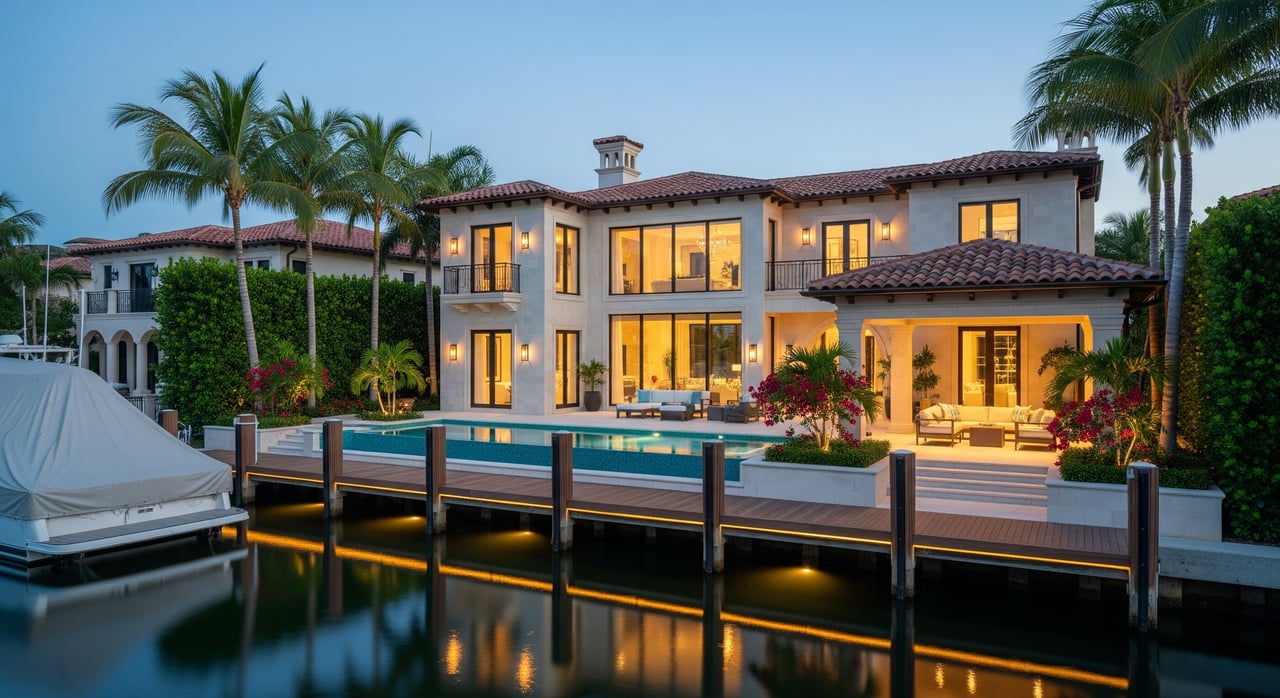
A broad canal or open bay increases separation and view quality. You read more horizon and less architectural detail, which naturally boosts privacy. Wider water also invites more cross-breezes and can increase reflections and glare at low sun angles, so plan shading for morning and evening.
Boaters: check depth and alignment
Canal width at the lot line does not guarantee easy navigation. Turning room, channel depth, and the route to open water are separate variables. If boating is a priority, verify alignment, depth, and distance to the Intracoastal or open water during due diligence.
Skyline sightlines
What sits beyond the water is the frame for your view. On some island blocks you see an open horizon. On others, the mainland profile introduces taller forms in the distance. Each backdrop affects the mood, privacy, and sometimes sun access.
Open horizon vs. urban backdrop
An open horizon centers the water and sky, creating a calm, expansive feel. A visible urban skyline delivers a more dynamic city-water panorama that some buyers love. Either way, the backdrop sets the tone of your daily view and evening ambience.
Distance and height change sunlight
Distant skylines rarely block significant daylight, though they can silhouette against sunsets. Taller structures or trees located closer to your lot may cast longer shadows at certain hours. A skyline to the west can heighten sunset drama yet cut late-afternoon sun if nearby buildings are tall and close.
Privacy across the water
Greater horizontal distance reduces detail and direct sightlines. On wider water, modest landscape layers can achieve privacy without closing the view. On tighter canals, be more strategic about screen placement and window design to limit cross-views from upper floors across the way.
Privacy tactics that keep the view
Thoughtful design can balance openness with discretion. Use a light touch so you preserve breeze, daylight, and your water outlook.
- House massing: Stagger footprints and keep upper floors narrower to reduce direct side-to-side views.
- Window strategy: Place larger panes toward the water; use clerestories, privacy glazing, or fewer openings on neighbor-facing sides.
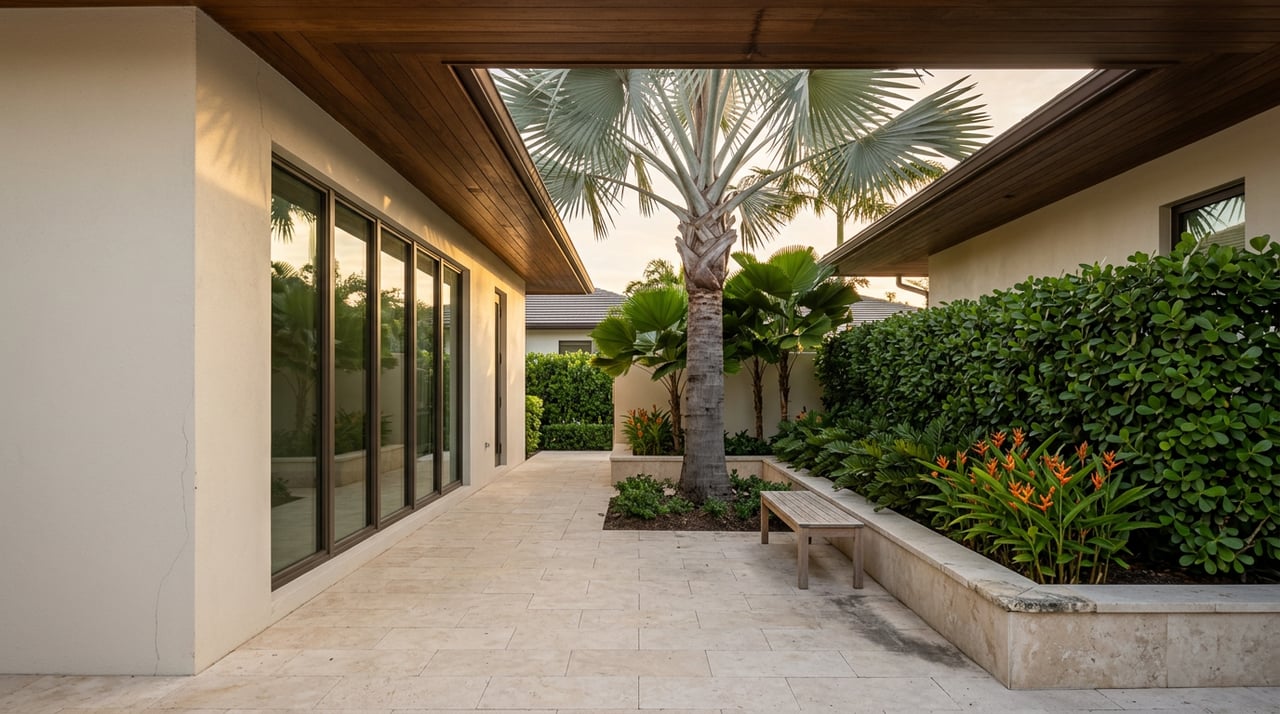
- Landscape layers: Combine palms, evergreen shrubs, and flowering vines for vertical screening. Go lower where canal width already helps.
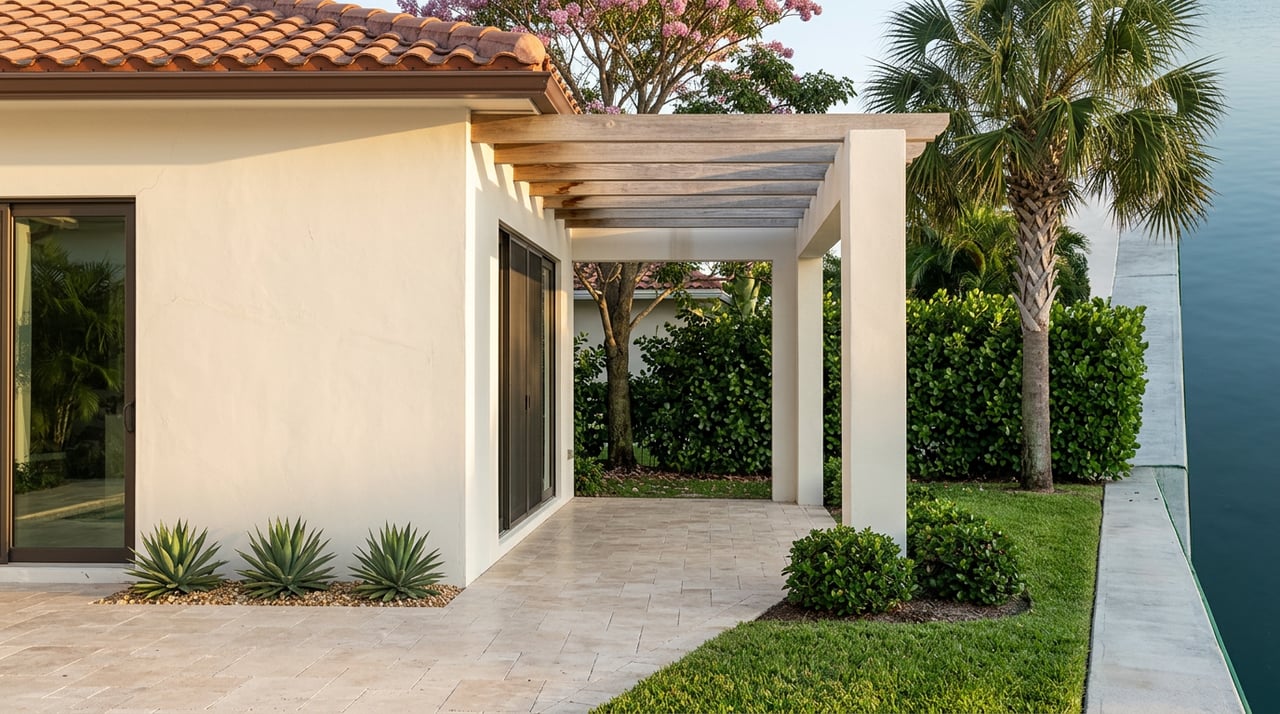
- Shading elements: Deep eaves, pergolas, and adjustable louvered roofs temper west and south sun while defining outdoor rooms.
- Movable screens: Consider louvered terrace panels or motorized shades to tune privacy and glare seasonally.
- Glass performance: Low-E coatings and selective films reduce heat gain and can limit inward visibility at certain times.
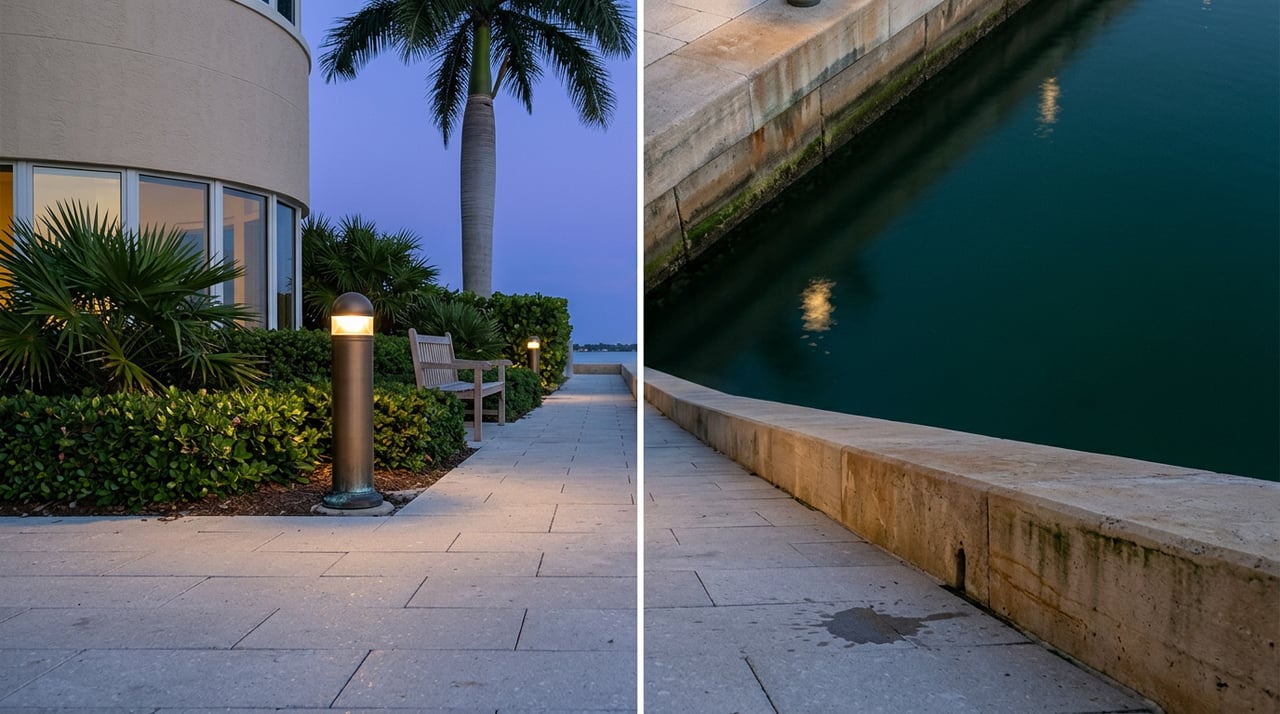
- Night lighting: Use downward-focused, shielded fixtures to protect night privacy and reduce light spill across the canal.
What to look for during showings
A short field checklist helps you compare lots with clarity. Try to visit at different times of day when possible.
- Map the orientation and note which rooms and outdoor spaces get morning vs. afternoon sun.
- Walk the seawall or dock and study neighbor sightlines from first and second levels.
- Gauge the perceived distance to the opposite bank and typical activity across the water.
- Identify the skyline backdrop from primary living areas and terraces.
- Ask for permits and maintenance records for seawall and dock work.
- Assess landscape maturity. New plantings need time to deliver meaningful screening.
Smart pre-listing moves for sellers
You can showcase privacy and view quality with small, thoughtful upgrades and timing.
- Add targeted screening with layered plantings or planters in key sightlines.
- Install adjustable shading over west-facing terraces to create usable late-afternoon spaces.
- Photograph at the best hour for your orientation. Morning for east-facing, evening for west-facing.
- Include aerials or plan-view visuals that show canal width and the broader vista context.
Permitting and practical notes
Waterfront work almost always requires permits and specialized contractors. Before planning major changes, check with:
- Your local municipality for zoning, setbacks, height, and coastal rules.
- Palm Beach County or the relevant county office for building and sitework regulations when applicable.
- Florida Department of Environmental Protection and South Florida Water Management District for coastal permits and seawall or dredging requirements.
- U.S. Army Corps of Engineers for projects affecting navigable waters.
Seawall and dock repairs or replacements typically need permits and experienced marine contractors. Setbacks and height limits can influence how you reorient living spaces or add second-floor terraces. Confirm code compliance early.
How Shayna helps you decide
Choosing between sunrise calm or sunset color involves real trade-offs in heat, breeze, and privacy. You deserve clear, concierge-level guidance that measures those trade-offs against your lifestyle and investment goals. With a client-first advisory approach, technical credentials in sustainability, and deep experience across Miami’s premier islands, you get a trusted partner who helps you evaluate orientation, canal width, skyline context, and the right design strategies to refine each property post-close.
If you’re comparing the Venetian, Sunset, Star, Hibiscus, or Palm islands, we will help you prioritize what matters most, align the short list with boating and privacy needs, and coordinate the right experts to implement improvements confidently.
Ready to explore your options or position a listing for the best light and privacy story? Request a Private Consultation with Shayna Hanson.
FAQs
What is the best orientation for Miami island homes?
- There is no single best choice. East-facing brings morning sun and cooler afternoons, west-facing offers sunsets and warmer late days, and south-facing gives steady daylight. Match the orientation to how you live outdoors.
Do wider canals guarantee more privacy?
- Wider canals usually increase perceived privacy by reducing direct sightlines, though nearby building height and landscape still influence the result.
Will the mainland skyline block my sunlight?
- Distant skylines typically do not cause major solar loss, but nearby tall buildings or trees can cast shadows at certain hours depending on orientation.
How fast can landscaping create privacy?
- Layered plantings can deliver partial screening in a few years. For immediate effect, use container plantings, trellises, or adjustable screens while new landscape matures.
What should sellers highlight about privacy and views?
- Photograph at orientation-friendly times, show canal width and skyline context in visuals, and describe neighbor proximity and screening clearly so buyers know what to expect.